Matching selection and spraying process of anticorrosive paint for underwater valves
1 underwater environment analysis: according to the classification of corrosion environment in ISO 12944: corrosion protection of protective paint system on steel structures, the underwater (Marine) environment belongs to c5-m (Marine) heavy corrosion environment. As there are many inorganic salts in the seawater, the seawater itself is a strong corrosive medium. In addition, the microorganisms in the water and the fluidity of the seawater and other factors cause serious corrosion of the paint on the valve surface and strong corrosion on the metal of the valve product itself. 2 anti corrosion paint matching selection due to the strong corrosiveness of the underwater environment, we must select the paint with excellent anti-corrosion performance, and the paint must adapt to the underwater immersion environment. According to SH / T 3022-2011: Code for anticorrosion design of petrochemical equipment and pipeline coatings, inorganic silicate zinc rich primer suitable for “steel surface with high anticorrosion performance requirements” shall be selected, and thick film epoxy micaceous iron paint shall be selected as the intermediate paint to enhance the shielding protection in the anticorrosion coating system; In addition to strong anti-corrosion performance, the selection of the top coat also needs to have good applicability to the impregnation environment. Here, we use low surface treatment epoxy resin paint, which has better above characteristics; According to the recommended film thickness (dry film) of the product, the selection of z-terminal is: inorganic silicate zinc rich primer (75um) + epoxy micaceous iron paint (125) + surface treatment epoxy resin paint (100um). 3. The roughness of spraying surface preparation has a great impact on the substrate spraying, which is manifested in three aspects: first, the larger the surface roughness, the uneven surface of the substrate and the attached primer will bite each other, and the greater the adhesion will naturally be; Second, the larger the roughness, the larger the real surface area of the matrix, and the stronger the adsorption performance; Third, the greater the roughness is, the corrosion products are not easy to diffuse when the matrix is corroded, reducing the impact of corrosion products on adhesion. The outer surface of the valve is mostly machined surface with small surface roughness, which is not conducive to the spraying of inorganic silicate zinc rich primer. Therefore, sand blasting is usually used to increase the roughness of the substrate surface and the surface derusting grade. The specific roughness can be recommended according to the paint specification. Before sand blasting, grind all welds, sharp edges, flanging and chamfering to make smooth transition and remove all welding spatter. All surfaces (100%) before blasting shall be free from any foreign matter such as flux, residue, crack, oil, grease and salt. Oil, grease or other surface dirt shall be removed in accordance with specification sspc-sp1. All surfaces to be coated shall be clean, dry and free from contaminants. Before painting, all surfaces shall be evaluated and treated in accordance with ISO 8504:2000. 4 spraying process: the base metal surface is in a relatively active state after sandblasting, which is very easy to react with water in the air and cause rust. Therefore, the primer shall be applied within four hours after sandblasting. The primer, intermediate paint and finish paint shall not be applied under any of the following conditions: (1) the surface of the prepared paint is wet or wet; (2) The metal temperature is not more than 5 ° C higher than the dew point temperature? ± 3 ℃; (3) When the relative humidity exceeds 85%; (4) The temperature of steel or ambient air is below 45? ± 7 ℃. The distance of the spray gun shall be controlled at about 30cm. If the distance of the spray gun is too close, the paint atomization is not good and sagging is easy to occur; If the spray gun is too far away, a considerable part of the paint will not be sprayed on the surface of the workpiece, resulting in low coating efficiency and a large amount of waste. As shown in Fig. 1. Painting sequence: if there are many irregular surfaces of the parts to be painted, the hidden surface can be painted / brushed first, and then the whole surface can be painted to avoid local sagging (metal powder paint is easier to sagging than ordinary paint) caused by repeated spraying of metal powder enamel, which will affect the appearance quality. Spray gun adjustment: adjust the spray gun to the appropriate air pressure, flow rate and spraying angle as far as possible according to the use requirements, so as to ensure the film thickness requirements and avoid sagging. The atomized coating shall be sprayed on the surface of the workpiece with the largest fan as possible to improve the spraying efficiency and quality. 5 inspection methods and standards the inspection methods and standards involved in this process are as follows: ISO 8504:2000: preparation of steel substrates before coating and related products; ISO 2409-2007: Paints and varnishes – cross cut test, acceptance level: 0-2; ISO 8501-1-2007: steel pretreatment and visual assessment of surface cleanliness before painting and related products, acceptance level: SA 3; ISO 8502-3: Standard for dust cleanliness of steel plate surface after sandblasting, acceptance level: 0-2;
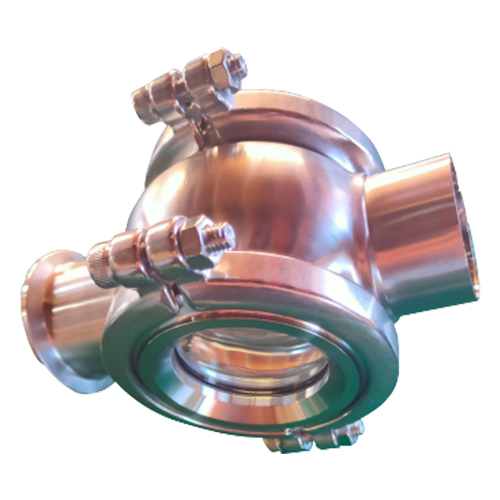 spherical sight glass
Matching selection and spraying process of anticorrosive paint for underwater valves
1 underwater environment analysis: according to the classification of corrosion environment in ISO 12944: corrosion protection of protective paint system on steel structures, the underwater (Marine) environment belongs to c5-m (Marine) heavy corrosion environment. As there are many inorganic salts in the seawater, the seawater itself is a strong corrosive medium. In addition, the microorganisms in the water and the fluidity of the seawater and other factors cause serious corrosion of the paint on the valve surface and strong corrosion on the metal of the valve product itself. 2 anti corrosion paint matching selection due to the strong corrosiveness of the underwater environment, we must select the paint with excellent anti-corrosion performance, and the paint must adapt to the underwater immersion environment. According to SH / T 3022-2011: Code for anticorrosion design of petrochemical equipment and pipeline coatings, inorganic silicate zinc rich primer suitable for “steel surface with high anticorrosion performance requirements” shall be selected, and thick film epoxy micaceous iron paint shall be selected as the intermediate paint to enhance the shielding protection in the anticorrosion coating system; In addition to strong anti-corrosion performance, the selection of the top coat also needs to have good applicability to the impregnation environment. Here, we use low surface treatment epoxy resin paint, which has better above characteristics; According to the recommended film thickness (dry film) of the product, the selection of z-terminal is: inorganic silicate zinc rich primer (75um) + epoxy micaceous iron paint (125) + surface treatment epoxy resin paint (100um). 3. The roughness of spraying surface preparation has a great impact on the substrate spraying, which is manifested in three aspects: first, the larger the surface roughness, the uneven surface of the substrate and the attached primer will bite each other, and the greater the adhesion will naturally be; Second, the larger the roughness, the larger the real surface area of the matrix, and the stronger the adsorption performance; Third, the greater the roughness is, the corrosion products are not easy to diffuse when the matrix is corroded, reducing the impact of corrosion products on adhesion. The outer surface of the valve is mostly machined surface with small surface roughness, which is not conducive to the spraying of inorganic silicate zinc rich primer. Therefore, sand blasting is usually used to increase the roughness of the substrate surface and the surface derusting grade. The specific roughness can be recommended according to the paint specification. Before sand blasting, grind all welds, sharp edges, flanging and chamfering to make smooth transition and remove all welding spatter. All surfaces (100%) before blasting shall be free from any foreign matter such as flux, residue, crack, oil, grease and salt. Oil, grease or other surface dirt shall be removed in accordance with specification sspc-sp1. All surfaces to be coated shall be clean, dry and free from contaminants. Before painting, all surfaces shall be evaluated and treated in accordance with ISO 8504:2000. 4 spraying process: the base metal surface is in a relatively active state after sandblasting, which is very easy to react with water in the air and cause rust. Therefore, the primer shall be applied within four hours after sandblasting. The primer, intermediate paint and finish paint shall not be applied under any of the following conditions: (1) the surface of the prepared paint is wet or wet; (2) The metal temperature is not more than 5 ° C higher than the dew point temperature? ± 3 ℃; (3) When the relative humidity exceeds 85%; (4) The temperature of steel or ambient air is below 45? ± 7 ℃. The distance of the spray gun shall be controlled at about 30cm. If the distance of the spray gun is too close, the paint atomization is not good and sagging is easy to occur; If the spray gun is too far away, a considerable part of the paint will not be sprayed on the surface of the workpiece, resulting in low coating efficiency and a large amount of waste. As shown in Fig. 1. Painting sequence: if there are many irregular surfaces of the parts to be painted, the hidden surface can be painted / brushed first, and then the whole surface can be painted to avoid local sagging (metal powder paint is easier to sagging than ordinary paint) caused by repeated spraying of metal powder enamel, which will affect the appearance quality. Spray gun adjustment: adjust the spray gun to the appropriate air pressure, flow rate and spraying angle as far as possible according to the use requirements, so as to ensure the film thickness requirements and avoid sagging. The atomized coating shall be sprayed on the surface of the workpiece with the largest fan as possible to improve the spraying efficiency and quality. 5 inspection methods and standards the inspection methods and standards involved in this process are as follows: ISO 8504:2000: preparation of steel substrates before coating and related products; ISO 2409-2007: Paints and varnishes – cross cut test, acceptance level: 0-2; ISO 8501-1-2007: steel pretreatment and visual assessment of surface cleanliness before painting and related products, acceptance level: SA 3; ISO 8502-3: Standard for dust cleanliness of steel plate surface after sandblasting, acceptance level: 0-2;
spherical sight glass